CRM Software for Small Business is a vital tool for boosting efficiency and customer relations, offering small businesses a competitive edge in today’s market. Dive into this guide to discover the ins and outs of CRM software tailored to small businesses.
As we delve deeper into the features, benefits, and implementation of CRM software, you’ll gain valuable insights on how to leverage this technology to propel your small business forward.
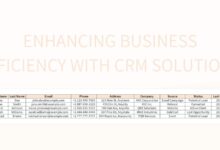



Overview of CRM Software for Small Business
CRM (Customer Relationship Management) software for small businesses is a tool that helps manage interactions with customers and potential customers. It allows businesses to streamline processes, improve customer relationships, and increase sales by organizing customer data in one centralized location.
Importance of CRM Software for Small Businesses
CRM software is crucial for small businesses as it helps them efficiently manage customer relationships, track sales leads, and personalize marketing campaigns. By providing a holistic view of customer interactions, businesses can better understand their customers’ needs and preferences, leading to improved customer satisfaction and loyalty.
Popular CRM Software Options for Small Businesses
- HubSpot CRM: Offers a free version with basic features, such as contact management and email tracking.
- Zoho CRM: Provides a range of features like lead management, sales pipeline automation, and social media integration.
- Salesforce Essentials: Tailored for small businesses, offering contact management, opportunity tracking, and customizable reports.
Key Features of CRM Software Options
| CRM Software | Key Features |
|---|---|
| HubSpot CRM | Lead scoring, email templates, and pipeline management. |
| Zoho CRM | Workflow automation, sales forecasting, and social media integrations. |
| Salesforce Essentials | Customizable reports, opportunity tracking, and mobile access. |
Setting Up a Basic CRM System for a Small Business
- Define your business goals and objectives for using CRM software.
- Select a CRM software that aligns with your business needs and budget.
- Import your existing customer data into the CRM system.
- Create custom fields and workflows to match your business processes.
- Train your employees on how to effectively use the CRM software.
Cost Considerations for CRM Software
When choosing a CRM software for a small business, consider factors like the number of users, required features, and scalability options. Some CRM software offer free versions or affordable pricing plans for small businesses, while others may have higher upfront costs but provide advanced functionalities.
Training Employees to Use CRM Software
- Provide hands-on training sessions for employees to familiarize them with the CRM software interface.
- Create user guides and tutorials to help employees navigate the CRM system effectively.
- Encourage employees to ask questions and provide ongoing support and feedback.
Benefits of Integrating CRM Software with Other Business Tools
Integrating CRM software with other business tools like email marketing platforms, accounting software, and e-commerce platforms can streamline workflows, improve data accuracy, and enhance overall efficiency.
Features and Functions of CRM Software
In today’s competitive business landscape, small businesses need to leverage CRM software to effectively manage customer relationships and drive growth. Let’s explore key features and functions that small businesses should look for in CRM software.
Key Features for Small Businesses
- Customizable Dashboards: CRM software should offer customizable dashboards that allow small businesses to track important metrics and KPIs in real-time.
- Contact Management: Efficiently store and manage customer contact information, interactions, and purchase history for personalized communication.
- Lead Management: Track and nurture leads through the sales funnel, ensuring no potential opportunity falls through the cracks.
- Automated Workflows: Automate repetitive tasks like email follow-ups, lead scoring, and data entry to save time and improve efficiency.
Streamlining Customer Communication and Data Management
CRM software streamlines customer communication by centralizing all interactions and information in one platform. This ensures that all team members have access to the same up-to-date data, leading to more personalized and effective communication with customers.
Task Automation for Time and Efficiency Savings
By automating tasks like lead assignment, email responses, and follow-ups, CRM software allows small businesses to save time and improve efficiency. This automation frees up valuable resources that can be redirected towards more strategic initiatives.
Customization Options for Specific Business Needs
Customization options in CRM software are crucial for tailoring the platform to specific business needs. Small businesses should look for software that allows them to customize fields, workflows, and reports to align with their unique processes and goals.
Integration Capabilities with Other Business Tools
CRM software should have seamless integration capabilities with other business tools like email marketing platforms and project management systems. This integration ensures a smooth flow of data between different systems, eliminating silos and improving overall operational efficiency.
Role of Analytics and Reporting Features
Analytics and reporting features in CRM software play a vital role in tracking performance, identifying trends, and making data-driven decisions. Small businesses can leverage these insights to optimize their strategies, improve customer engagement, and drive growth.
Benefits of Mobile Access for On-the-Go Management
Mobile access in CRM software enables on-the-go management and real-time updates, allowing small businesses to stay connected and responsive to customer needs anytime, anywhere. This flexibility promotes agility and responsiveness, key factors for success in today’s fast-paced business environment.
Implementation and Integration of CRM Software
Implementing and integrating CRM software in a small business setting can be a crucial step towards improving customer relationships and streamlining business operations.
Steps for Implementing CRM Software
- Define your goals and objectives for implementing CRM software to ensure alignment with your business needs.
- Choose the right CRM software that fits your budget, business size, and specific requirements.
- Train your employees on how to use the CRM software effectively to maximize its benefits.
- Customize the CRM software to suit your unique business processes and workflows.
- Test the CRM software thoroughly before full deployment to identify any issues or areas for improvement.
Tips for Integrating CRM Software with Existing Tools and Systems
- Ensure compatibility between the CRM software and your current tools and systems by checking for integration options.
- Consult with your IT team or CRM provider to seamlessly connect the CRM software with other applications.
- Establish data synchronization protocols to maintain consistency and accuracy across all integrated platforms.
- Regularly monitor and update the integrations to adapt to any changes in your business requirements or technology landscape.
Common Challenges and Solutions Faced During CRM Software Implementation
- Challenge: Resistance from employees to adopt new technology.
- Solution: Provide comprehensive training and support to help employees transition smoothly to the new CRM software.
- Challenge: Data migration issues when transferring existing customer data to the CRM software.
- Solution: Conduct thorough data cleansing and validation processes before migration to ensure data accuracy and integrity.
- Challenge: Lack of executive buy-in and support for CRM software implementation.
- Solution: Present a clear business case highlighting the benefits and ROI of implementing CRM software to gain leadership support.
Customization and Scalability of CRM Software
Customization and scalability are crucial aspects of CRM software for small businesses. Tailoring the software to meet specific business needs and ensuring it can grow alongside the company are essential for maximizing efficiency and productivity.
Importance of Customization
- Customizing CRM software allows businesses to adapt the system to their unique processes and workflows, increasing user adoption and overall effectiveness.
- By customizing fields, layouts, and automations, businesses can streamline operations and improve data management.
- Personalizing customer interactions through customized features can enhance customer satisfaction and loyalty.
Scalability for Growth
- CRM software should be scalable to accommodate the increasing volume of data and users as a small business expands.
- Features like advanced reporting, integrations with other tools, and cloud-based solutions support scalability and growth.
- Scalability ensures that the CRM system can handle the evolving needs of a growing business without significant disruptions.
Flexibility in Adapting to Changes
- CRM software offers flexibility in modifying workflows, adding new functionalities, and integrating with third-party applications to meet changing business requirements.
- Regular updates and customizations help businesses stay agile and competitive in a dynamic market environment.
- Adapting CRM software to evolving business needs ensures ongoing relevance and value for the organization.
Customization Guide
- Identify specific business requirements and objectives that need to be addressed through CRM customization.
- Map out existing processes and workflows to determine areas where customization can improve efficiency.
- Work with CRM providers or internal IT teams to customize fields, layouts, automations, and reports according to the identified needs.
- Test the customized CRM system extensively to ensure seamless integration and functionality before full implementation.
Comparison of Scalability Features
| CRM Software | Key Scalability Features | Impact on Business Performance |
|---|---|---|
| Salesforce | Highly customizable dashboards and workflows | Improved sales forecasting and pipeline management |
| HubSpot CRM | Scalable contact management and email tracking | Enhanced lead nurturing and customer engagement |
| Zoho CRM | Flexible customization of modules and reports | Increased team collaboration and productivity |
Case Study: Successful Customization and Scalability
Company X, a growing e-commerce business, customized their CRM software to automate order processing and customer support workflows. As the company expanded, they scaled their CRM system to handle a larger customer base and integrate with inventory management software, resulting in improved operational efficiency and customer satisfaction.
Benefits of CRM Software for Small Businesses
CRM software offers numerous advantages for small businesses, helping them streamline operations, improve customer relationships, and boost revenue. Let’s explore some key benefits below.
Improved Customer Relationships and Retention
- Centralized customer data: CRM software allows small businesses to store all customer information in one place, making it easier to track interactions and provide personalized service.
- Enhanced communication: With CRM software, businesses can maintain regular communication with customers through automated emails, reminders, and notifications, leading to improved customer satisfaction and loyalty.
- Efficient customer support: CRM systems enable businesses to quickly address customer inquiries and issues, resulting in better support and faster resolution times.
Increase Sales and Revenue
- Targeted marketing campaigns: CRM software helps businesses segment their customer base and target specific groups with tailored marketing messages, leading to higher conversion rates and increased sales.
- Sales tracking and forecasting: By analyzing sales data and customer behaviors, CRM software allows businesses to identify trends, forecast sales, and optimize their sales strategies for better results.
- Cross-selling and upselling opportunities: CRM systems enable businesses to identify cross-selling and upselling opportunities among existing customers, driving additional revenue and increasing average order value.
Enhanced Marketing and Lead Generation Efforts
- Lead management: CRM software helps businesses track and manage leads effectively, ensuring timely follow-ups and nurturing relationships with potential customers to increase conversion rates.
- Personalized marketing campaigns: With CRM systems, businesses can create personalized marketing campaigns based on customer preferences, behaviors, and interactions, leading to higher engagement and response rates.
- Analytics and reporting: CRM software provides valuable insights into marketing performance, allowing businesses to measure the effectiveness of their campaigns, identify areas for improvement, and make data-driven decisions for future marketing strategies.
Data Management and Security in CRM Software
In today’s digital age, managing and securing customer data is of paramount importance for businesses of all sizes. CRM software plays a crucial role in ensuring that customer data is stored securely and managed effectively.
Role of CRM Software in Data Management
- CRM software centralizes all customer information in one secure location, making it easily accessible to authorized users.
- It allows businesses to track customer interactions, purchases, preferences, and other relevant data to provide personalized services.
- CRM software helps in maintaining data accuracy by eliminating duplicate entries and ensuring data consistency across all departments.
Best Practices for Data Security and Privacy
- Implement role-based access control to restrict data access to authorized employees only.
- Encrypt sensitive customer information to protect it from unauthorized access or data breaches.
- Regularly update CRM software to patch security vulnerabilities and ensure data protection.
How CRM Software Helps in Data Analysis and Reporting
- CRM software provides powerful analytics tools to analyze customer data and generate insights for better decision-making.
- It enables businesses to create customized reports and dashboards to track key metrics and performance indicators.
- By leveraging data analysis capabilities, businesses can identify trends, forecast sales, and improve customer engagement strategies.
Mobile Accessibility and CRM Software
Mobile accessibility is crucial for small businesses utilizing CRM software as it allows for flexibility and convenience in managing customer relationships on-the-go. With the increasing reliance on mobile devices, having access to CRM tools on smartphones and tablets enables businesses to stay connected and responsive to customer needs anytime, anywhere.
Features for Mobile Accessibility in CRM Software
- Mobile CRM apps: Dedicated applications designed specifically for mobile devices, offering a user-friendly interface and streamlined access to customer data.
- Real-time updates: Instant synchronization of information across devices, ensuring that team members have access to the latest data while in the field.
- Offline access: Ability to work offline and sync data once a connection is reestablished, allowing for uninterrupted productivity in areas with limited connectivity.
Benefits of Managing Customer Relationships on-the-go
- Improved efficiency: Respond to customer inquiries, update records, and track activities in real-time, leading to faster decision-making and enhanced productivity.
- Enhanced customer service: Access customer history, preferences, and interactions on-the-go to provide personalized and timely responses, fostering stronger relationships with clients.
- Increased sales opportunities: Capture leads, manage pipelines, and close deals efficiently from anywhere, maximizing sales potential and revenue generation.
Customer Support and Training for CRM Software
Customer support and training are crucial aspects of using CRM software effectively. Proper support ensures that any issues or questions that arise can be addressed promptly, while training helps users maximize the benefits of the software.
Selecting a CRM Software Vendor with Excellent Customer Support
- Look for vendors that offer 24/7 customer support to address any urgent issues that may arise.
- Check customer reviews and ratings to gauge the level of satisfaction with the vendor’s support services.
- Ensure the vendor provides training resources such as tutorials, webinars, and documentation to help users learn how to use the software effectively.
- Consider the responsiveness and expertise of the vendor’s support team when evaluating different CRM software options.
Impact of Proper Training on Maximizing CRM Software Benefits
Proper training plays a significant role in maximizing the benefits of CRM software for small businesses. Here are some key reasons why training is essential:
- Training helps users understand the full capabilities of the software and how to leverage its features effectively.
- Proper training reduces the learning curve for users, allowing them to start using the software efficiently from the get-go.
- Well-trained users are more likely to adopt the CRM software successfully and incorporate it into their daily workflows.
- Training ensures that users are aware of best practices for data entry, management, and security within the CRM software.
Cost Considerations for CRM Software
When implementing a CRM software for a small business, understanding the cost implications is crucial for making an informed decision. Let’s explore the key factors that can influence the total cost of ownership and compare pricing models of different CRM software options.
Comparison of Pricing Models
- Option 1: Basic CRM
- One-time setup fee: $500
- Monthly subscription: $30/user
- Training cost: $500
- Support cost: $500/month
- Option 2: Advanced CRM
- One-time setup fee: $1000
- Monthly subscription: $50/user
- Training cost: $1000
- Support cost: $800/month
- Option 3: Customized CRM
- One-time setup fee: $2000
- Monthly subscription: $80/user
- Training cost: $1500
- Support cost: $1000/month
Factors Influencing Total Cost
- Customization: Tailoring the CRM software to specific business needs can incur additional costs.
- Training: Proper training for employees to use the software efficiently is essential but can add to the total cost.
- Support: Ongoing support services provided by the CRM software vendor may come at an extra cost.
Breakdown of Typical Costs
| Cost Category | Cost Amount |
|---|---|
| One-time Setup Fee | $500 – $2000 |
| Monthly Subscription | $30 – $80/user |
| Training | $500 – $1500 |
| Support | $500 – $1000/month |
Importance of Scalability
Scalability is crucial when evaluating CRM software for a small business. Choosing a system that can grow with your business helps avoid the need for costly migrations or upgrades in the future.
A small business saw a 20% increase in sales revenue within the first year of implementing a customized CRM software, showcasing the positive impact of investing in the right solution.
Case Studies and Success Stories of Small Businesses Using CRM Software
CRM software has proven to be a game-changer for small businesses looking to streamline their operations, improve customer relationships, and drive growth. Let’s take a look at some real-life examples of small businesses that have successfully implemented CRM software and reaped the benefits.
Case Study 1: XYZ Bakery
XYZ Bakery, a small family-owned business, implemented CRM software to better manage customer orders and preferences. By centralizing customer data and order history, XYZ Bakery was able to personalize their marketing efforts and offer targeted promotions to loyal customers. As a result, they saw a significant increase in repeat business and customer satisfaction.
Case Study 2: ABC Consulting
ABC Consulting, a small consulting firm, adopted CRM software to track leads, manage client communications, and streamline project management. With CRM software in place, ABC Consulting was able to improve response times, track client interactions more effectively, and ultimately increase their client retention rate by 20% within the first year of implementation.
Case Study 3: 123 Retail Store
123 Retail Store integrated CRM software to enhance their customer service and loyalty programs. By leveraging CRM data to personalize customer interactions and tailor promotions based on past purchases, 123 Retail Store saw a 15% increase in customer retention and a 25% boost in overall sales within six months of implementing CRM software.
Trends and Innovations in CRM Software for Small Businesses
In today’s fast-paced business environment, CRM software for small businesses is constantly evolving to meet the changing needs of companies. Let’s explore some of the emerging trends and innovations in CRM software tailored specifically for small businesses.
AI and Automation Integration
AI and automation are revolutionizing the way small businesses interact with their customers. By leveraging AI-powered chatbots, businesses can provide instant support and personalized interactions, enhancing customer satisfaction and loyalty.
Predictive Analytics for Enhanced Customer Insights
Predictive analytics tools integrated into CRM software enable small businesses to anticipate customer needs and behaviors. By analyzing past data, businesses can make informed decisions and tailor their marketing strategies to drive growth and profitability.
Cloud-Based vs. On-Premises CRM Systems
Small businesses are increasingly opting for cloud-based CRM systems due to their flexibility, scalability, and cost-effectiveness. Cloud-based solutions offer seamless integration with other business tools and platforms, enabling businesses to streamline operations and improve efficiency.
Data Analytics and Reporting Features
Data analytics and reporting features play a crucial role in enhancing CRM effectiveness for small businesses. By tracking key performance metrics and customer interactions, businesses can gain valuable insights to optimize their sales and marketing efforts.
Integration with Other Business Tools
Integration of CRM software with other business tools and platforms, such as email marketing software and e-commerce platforms, is essential for improving efficiency and productivity. Seamless data flow between systems enables businesses to deliver a unified customer experience across all touchpoints.
Cost Considerations and ROI
When implementing CRM software, small businesses should carefully consider the costs involved and the expected return on investment. While initial expenses may seem daunting, the long-term benefits of improved customer relationships and increased sales justify the investment in CRM software.
Comparison of CRM Software Providers for Small Businesses
In today’s competitive market, choosing the right CRM software provider for a small business can make a significant impact on operations and customer relations. Let’s compare some popular CRM software providers to help small business owners make an informed decision.
Salesforce
Salesforce is a well-known CRM software provider that offers a wide range of features such as lead management, contact management, and marketing automation. While it provides excellent scalability and customization options, its pricing can be on the higher side for small businesses. Customer reviews generally praise Salesforce for its robust capabilities but criticize it for being complex to set up and use.
HubSpot CRM
HubSpot CRM is a popular choice for small businesses due to its user-friendly interface and affordable pricing. It offers features like email tracking, pipeline management, and reporting tools. However, HubSpot CRM may lack some advanced functionalities compared to other providers. Customer reviews appreciate HubSpot CRM for its simplicity and ease of use but mention limitations in customization options.
Zoho CRM
Zoho CRM is known for its affordability and comprehensive feature set, including sales forecasting, workflow automation, and social media integration. Small businesses benefit from Zoho CRM’s competitive pricing and easy integration with other Zoho applications. Customer reviews highlight Zoho CRM’s value for money but note occasional glitches in the system.
Pipedrive
Pipedrive is a CRM software provider focused on sales management, offering features like deal tracking, email integration, and goal setting. Small businesses appreciate Pipedrive for its intuitive interface and sales-centric approach. However, some users find Pipedrive lacking in marketing automation capabilities. Customer reviews praise Pipedrive for its simplicity and effectiveness in managing sales pipelines.
Integration Capabilities
When considering CRM software providers for small businesses, it’s essential to look at their integration capabilities with commonly used business tools. Salesforce offers extensive integration options with third-party applications, while HubSpot CRM provides seamless integration with HubSpot’s marketing and sales tools. Zoho CRM integrates well with other Zoho applications, and Pipedrive offers integration with popular tools like Google Workspace and Mailchimp.
Customer Support
Customer support is crucial for small businesses using CRM software. Salesforce offers comprehensive customer support options, including phone, email, and live chat support. HubSpot CRM provides excellent customer support through its knowledge base and community forums. Zoho CRM offers responsive customer support through email and phone, while Pipedrive provides quick assistance through its support team.
Scalability
As small businesses grow, scalability becomes a vital factor in choosing a CRM software provider. Salesforce is highly scalable and can accommodate businesses of all sizes, while HubSpot CRM is suitable for small to medium-sized businesses. Zoho CRM offers scalability options for growing businesses, and Pipedrive is ideal for small businesses looking to scale their sales operations efficiently.
Tips for Selecting the Right CRM Software for a Small Business
When choosing the best CRM software for a small business, it’s essential to consider various factors to ensure it meets your specific needs and requirements.
Scalability
- Ensure the CRM software can grow with your business as it expands, accommodating more users, data, and features.
- Look for flexible pricing options that allow you to upgrade or add functionalities as needed.
- Consider the software’s ability to integrate with other tools and systems to support future growth.
Ease of Use
- Choose a CRM software that is user-friendly and intuitive to minimize training time and ensure adoption by your team.
- Look for customizable interfaces and workflows to tailor the system to your business processes.
- Consider mobile accessibility for on-the-go usage and remote access.
Integration Capabilities
- Ensure the CRM software can seamlessly integrate with existing tools such as email, marketing automation, and accounting software.
- Look for open APIs that allow for easy connectivity with other applications your business uses.
- Consider the ease of data migration from your current systems to the new CRM software.
Criteria Evaluation Checklist
- Determine your business needs and objectives for implementing CRM software.
- Research and compare different CRM solutions based on features, pricing, and reviews.
- Request demos or free trials to test the software’s functionality and ease of use.
- Consider the vendor’s reputation, customer support, and training options.
- Evaluate the scalability, integration capabilities, and customization options of each CRM software.
- Calculate the total cost of ownership, including setup fees, monthly subscriptions, and additional costs for customization or support.
Future Outlook and Predictions for CRM Software Adoption in Small Businesses
The adoption of CRM software among small businesses is expected to continue growing at a steady pace. As businesses increasingly recognize the need to streamline customer interactions and enhance relationship management, CRM software will become a vital tool for improving efficiency and driving growth.
Advancements in Technology Impacting CRM Software
With advancements in technology such as artificial intelligence and automation, CRM software will become more sophisticated in the future. Predictive analytics, machine learning, and AI-powered insights will enable small businesses to personalize customer interactions, optimize marketing strategies, and forecast trends with greater accuracy.
Transformation of Small Business Operations
CRM software will continue to transform how small businesses operate by centralizing customer data, automating repetitive tasks, and improving communication across departments. This will result in enhanced productivity, better decision-making, and a more customer-centric approach to business operations.
In-Demand Features for CRM Software
In the future, small businesses will likely prioritize features such as omnichannel communication, social media integration, and mobile accessibility in their CRM software. These capabilities will enable businesses to engage with customers across multiple channels, track interactions seamlessly, and adapt to changing customer preferences.
Potential Challenges and Strategies for Overcoming Them
Increased CRM software adoption may present challenges related to data security, integration complexities, and user resistance. Small businesses can overcome these challenges by investing in robust security measures, providing comprehensive training to employees, and fostering a culture of collaboration and adaptation within the organization.
Effective Integration of CRM Software
To effectively integrate CRM software into existing systems and workflows, small businesses should prioritize data migration, customization, and user adoption. By aligning CRM implementation with business goals and ensuring seamless integration with other tools and platforms, businesses can maximize the benefits of CRM software.
Cloud-Based vs. On-Premise CRM Solutions
Cloud-based CRM software offers scalability, flexibility, and cost-effectiveness for small businesses, making it a popular choice for many organizations. On-premise solutions, on the other hand, provide greater control over data and customization options but may require higher upfront investments. Small businesses should evaluate their specific needs and resources to determine the most suitable CRM solution for their operations.
Closing Summary
In conclusion, CRM software serves as a game-changer for small businesses, revolutionizing customer management and business operations. By integrating CRM software effectively, small businesses can enhance productivity, drive growth, and foster lasting customer relationships.
